Leave Your Message

2026 Best Excavator Attachments for Global Buyers?

Choosing the best excavator attachments in 2026 requires more than comparing prices online. Global buyers need reliable performance, verified specifications, and support after delivery.

This guide examines Excavators Attachments for construction, demolition, landscaping, quarrying, and material handling. It considers hydraulic flow, operating weight, pin dimensions, working pressure, and carrier compatibility. A bucket that fits one 20-ton excavator may perform poorly on another. Small differences matter.

Real job conditions matter too. A breaker used on reinforced concrete faces severe vibration and heat. A grading bucket working in wet clay needs strong wear protection. In colder regions, seals and hydraulic oils must tolerate low temperatures. In coastal areas, corrosion resistance deserves closer attention.

Supplier credibility is equally important. Buyers should review factory records, inspection reports, warranty terms, spare-parts availability, and response times. Certification claims should be checked against recognized requirements in the destination market. Photos are useful, but they cannot replace drawings or testing data.

No ranking is perfect.

Some attachments look impressive but offer weak service support. Others cost more initially and reduce downtime over several years. This guide compares practical value rather than flashy specifications. It also recognizes an uncomfortable point: the cheapest attachment can become the most expensive choice after repeated repairs, shipping delays, or poor fit. Careful selection remains essential for safe, productive, and predictable excavator operations worldwide.

2026 Best Excavator Attachments for Global Buyers?

Excavator Attachment Types and Their Primary Applications

2026 Best Excavator Attachments for Global Buyers?

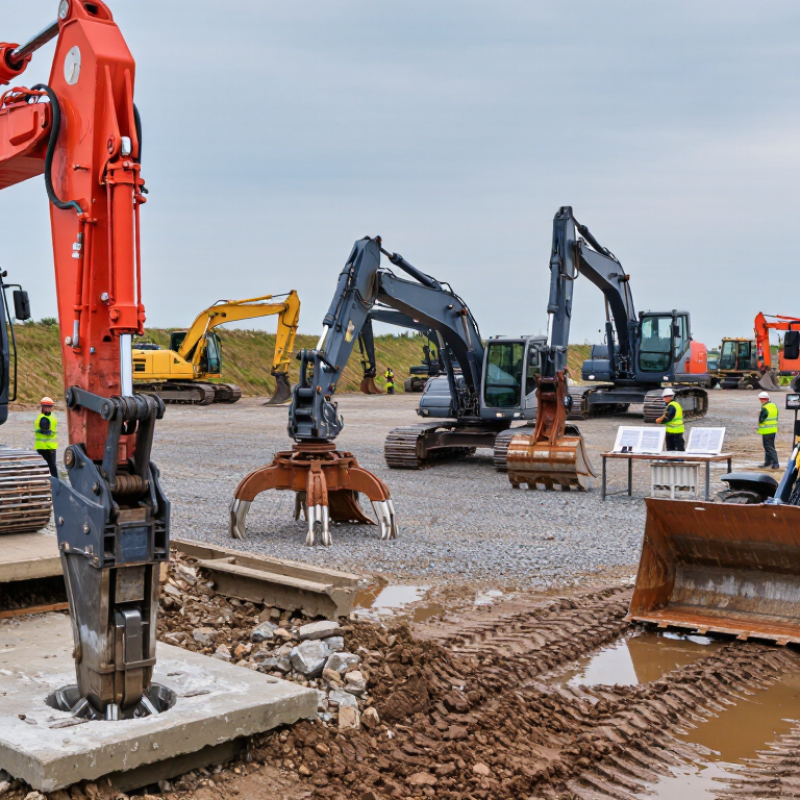
Excavator attachments turn one carrier into several working machines. Buckets remain the foundation for digging, grading, trenching, and loading. A narrow bucket suits utility trenches, while a wide grading bucket finishes slopes and drainage channels.

Breakers handle concrete and rock, but they need correct hydraulic flow and return-line pressure. Augers support fencing, foundations, and soil sampling. Grapples and thumbs improve sorting, demolition handling, and timber placement.

Grand View Research valued the global excavator market at about USD 63.8 billion in 2023, with continued growth forecast through 2030.

This wider market signals stronger demand for task-specific attachments. Research and Markets also identifies construction, demolition, forestry, and agriculture as major attachment-use sectors. However, market forecasts differ. Definitions are not always consistent. Buyers should check the methodology before comparing figures.

Carrier weight is only the starting point. Confirm pin diameter, hydraulic flow, operating pressure, quick-coupler dimensions, and attachment balance.

In wet clay, an over-wide bucket can increase drag and fuel use. In fractured rock, an undersized breaker may suffer excessive impact cycles.

A field inspection should record hose routing, bushing wear, and daily cycle time. Small details matter.

The cheapest attachment can become expensive through downtime, poor fit, or repeated maintenance. Local soil conditions and service access deserve equal attention.

Key Specifications for Comparing Excavator Attachments

2026 Best Excavator Attachments for Global Buyers?

Key Specifications for Comparing Excavator Attachments

Global buyers should compare compatibility before appearance. The excavator’s operating weight, hydraulic flow, and pressure define realistic attachment performance. An attachment rated for 120–160 litres per minute may underperform on a 20-ton machine with weaker auxiliary hydraulics. Check the carrier’s actual flow at working pressure, not only the brochure maximum. Also measure pin diameter, dipper width, mounting height, and quick-coupler geometry. ISO 13031 provides useful guidance for quick-coupler safety and interface design.

Attachment productivity depends on the job site. Compare bucket capacity, cutting-edge thickness, working width, and empty weight. For breakers, review impact energy, blow frequency, back-head pressure, and recommended oil flow. For grapples, record jaw opening, rotation torque, and rated load. Mordor Intelligence projects the global excavator market to grow from about USD 63.56 billion in 2025 to USD 82.11 billion by 2030. More machines may increase demand, but higher demand does not guarantee better attachment quality.

Field checks expose weaknesses quickly. Measure cycle time with a loaded bucket, inspect hose routing after two hours, and check pin movement when the attachment is cold. Noise and vibration matter too. They affect operators and nearby work areas. Some specifications remain difficult to compare across regions. “Maximum capacity” may describe a brief peak, not safe daily output. Buyers should request test conditions, maintenance intervals, and spare-part lead times in writing. A lower purchase price can become expensive when seals, bushings, or adapters require frequent replacement.

How to Match Attachments with Excavator Size and Job Requirements

2026 Best Excavator Attachments for Global Buyers?

Matching an attachment to an excavator starts with operating weight, not appearance. A compact excavator may handle a narrow bucket, auger, or light breaker. A heavier machine needs stronger structures, larger pins, and higher hydraulic capacity. Check the excavator’s auxiliary flow and pressure before selecting any hydraulic tool. Do not rely on catalog pictures alone.

Job conditions matter just as much. A trenching bucket should match soil hardness, trench width, and lifting limits. For frozen ground or reinforced concrete, compare breaker energy with the excavator’s stability. Forestry, demolition, and quarry work demand reinforced attachments and protected hydraulic lines. Measure the coupler, pin diameter, attachment width, and working radius on site. Small mismatches create costly downtime.

I have seen buyers choose a wide bucket for faster loading, then lose stability on soft ground. It looked efficient. It was not. Ask the supplier for load charts, flow requirements, wear-part details, and service guidance. Confirm spare-part access in your region. Inspect welds, cutting edges, hoses, and locking systems before delivery. One detail is easy to miss: attachment weight reduces the machine’s available lifting capacity. Recheck the figures with a qualified technician, especially when conditions change.

Safety, Compatibility, and Maintenance Considerations

2026 Best Excavator Attachments for Global Buyers?

Attachment safety starts with the coupler, not the sales brochure. ISO 13031 addresses quick-coupler safety and locking principles. Buyers should confirm visible lock indicators, hydraulic pressure limits, and pin dimensions before shipment.

A mismatch can damage the boom or eject the attachment. That failure is expensive. It can also injure nearby workers.

Compatibility requires more than matching excavator weight. Check hydraulic flow, operating pressure, auxiliary circuits, electrical controls, and attachment balance. A breaker designed for high flow may overheat a smaller machine. A rotating attachment may require extra return-line capacity.

The U.S. Bureau of Labor Statistics reported 1,075 fatal work injuries in private construction during 2023. That figure does not isolate excavator incidents, but it shows why exclusion zones and operator training deserve attention. Site conditions still change the risk.

Maintenance plans should include daily pin checks, hose inspections, grease intervals, and torque verification. The U.S. Department of Energy’s Operations & Maintenance Best Practices Guide cites potential maintenance-cost reductions of 12–18% through effective preventive programs.

Clean coupler faces before connecting. Record leaks with photographs and pressure readings. In practice, checklists are often too optimistic. Dust enters quickly, and operators may skip one small fitting. Buyers should request service manuals, spare-part lists, and inspection records in clear language. Availability matters more than a perfect specification sheet.

Global Purchasing Factors, Costs, and Supplier Evaluation

2026 Best Excavator Attachments for Global Buyers?

For global buyers, the best attachment is not always the most powerful option. Match the attachment to the excavator’s operating weight, hydraulic flow, pin dimensions, and daily workload. A breaker for reinforced concrete needs different pressure control than a bucket used in wet clay. Check steel thickness, wear parts, hose protection, and connection accuracy before comparing prices. Small mismatches can cause vibration, downtime, or unsafe machine behavior.

Calculate the landed cost, not only the factory quote. Include packaging, ocean or air freight, insurance, import charges, installation tools, spare parts, and possible currency changes. Ask suppliers for hydraulic test records, dimensional drawings, material information, warranty terms, and clear delivery schedules. A reliable supplier should explain limitations, not promise everything. Request photos of finished units and inspect a sample when the order is large. A specification sheet is not proof. Supplier evaluation is where many buyers remain too optimistic. The cheapest quote can look efficient, but it may hide weak seals or slow technical support.

Tips: Confirm your excavator model and flow rate in writing. Ask for a complete spare-parts list. Compare two or three landed-cost quotations. Test the attachment under realistic soil, rock, or demolition conditions. Keep a written record of every change. My own review process still misses details sometimes, especially when drawings change late. That is why final inspection matters.

2026 Best Excavator Attachments for Global Buyers? - Global Purchasing Factors, Costs, and Supplier Evaluation
Practical comparison for international buyers. Prices are indicative 2026 purchasing ranges in USD and should be confirmed against configuration, quantity, destination, and applicable standards.
Attachment Category Typical Excavator Class Main Applications Typical Technical Range Indicative Unit Cost Typical Lead Time Key Supplier and Product Checks Purchasing Priority
General-Purpose Bucket 1.5–6 metric tons Earthmoving, trenching, loading, landscaping, and general construction. Approx. 0.03–0.25 m³ capacity; widths commonly 300–1,200 mm; abrasion-resistant cutting edge recommended. US$300–1,800 2–6 weeks Check pin diameter, center-to-center dimensions, side-plate thickness, weld quality, tooth system, and compatibility with the excavator’s breakout force. Compatibility: High
Heavy-Duty Rock Bucket 8–30 metric tons Quarrying, rocky soil, demolition debris, and abrasive ground conditions. Approx. 0.35–1.50 m³ capacity; reinforced side cutters, wear bars, and replaceable teeth. US$2,000–10,000 4–10 weeks Verify steel grade, wear protection coverage, structural reinforcement, tooth availability, empty weight, and bucket-to-machine lifting capacity. Durability: High
Hydraulic Breaker 1.5–5 metric tons Concrete breaking, light demolition, utility work, and small-scale road repair. Approx. 20–80 kg operating weight; required hydraulic flow commonly 15–45 L/min; working pressure often 90–150 bar. US$700–3,500 2–6 weeks Check impact frequency, oil-flow and pressure range, tool diameter, back-head design, accumulator serviceability, noise level, and spare-tool availability. Hydraulics: High
Hydraulic Breaker 5–12 metric tons Medium demolition, foundation removal, road maintenance, and concrete slab breaking. Approx. 180–450 kg operating weight; required hydraulic flow commonly 35–90 L/min; tool diameter often 60–100 mm. US$2,000–8,000 3–8 weeks Request a hydraulic test report, cycle-rate data, mounting bracket drawing, hose specifications, warranty terms, and service-kit pricing. Reliability: High
Hydraulic Breaker 12–30 metric tons Heavy demolition, reinforced concrete, quarrying, and road construction. Approx. 700–1,500 kg operating weight; required hydraulic flow commonly 80–160 L/min; tool diameter often 100–150 mm. US$6,000–18,000 4–10 weeks Evaluate energy-per-blow, carrier stability, anti-blank-fire protection, vibration control, accumulator design, and availability of rebuild components. Lifecycle cost: High
Hydraulic Thumb 5–30 metric tons Sorting logs, handling rocks, loading demolition waste, and placing irregular materials. Typical tine length 900–2,000 mm; hydraulic cylinder operated; fixed and progressive-link designs available. US$1,500–12,000 3–8 weeks Confirm bucket interaction, mounting method, cylinder protection, pin design, hose routing, maximum gripping envelope, and machine counterweight requirements. Fit and safety: High
Hydraulic Grapple 5–30 metric tons Waste sorting, demolition handling, timber handling, recycling, and material loading. Approx. 0.20–1.20 m³ capacity; 360-degree rotation optional; shell or tine configurations available. US$2,500–15,000 4–10 weeks Check rotation torque, jaw synchronization, hydraulic leakage control, payload rating, wear-part replacement, opening width, and attachment balance. Productivity: High
Hydraulic Auger 2–20 metric tons Post holes, fencing, foundations, tree planting, soil sampling, and utility installation. Typical drilling diameter 100–900 mm; torque commonly 500–12,000 N·m; earth, rock, and carbide flight options. US$2,000–10,000 3–8 weeks Match motor displacement to carrier flow, verify torque and speed, inspect planetary gearbox protection, flight thickness, pilot design, and replacement tooth cost. Application fit: High
Hydraulic Compactor 3–20 metric tons Trench compaction, road shoulders, embankments, slope work, and foundation preparation. Typical plate width 400–900 mm; centrifugal force commonly 8–40 kN; vibration frequency often 1,800–3,000 rpm. US$2,000–9,000 3–8 weeks Check compaction force, isolation mounts, plate thickness, vibration transmission, hydraulic flow, drain requirements, and operator-safety provisions. Performance: Medium–High
Tiltrotator or Tilting Coupler 3–30 metric tons Precision grading, utility installation, landscaping, slope finishing, and reduced machine repositioning. Typical tilt range up to approximately 45 degrees per side; quick-coupler interface required; control integration may be needed. US$3,000–20,000 5–12 weeks Verify machine interface, hydraulic and electrical integration, locking indication, structural fatigue design, control compatibility, and emergency-release procedure. Integration: Very High
Flail Mower or Brush Cutter 5–20 metric tons Vegetation management, roadside maintenance, land clearing, drainage channels, and slope maintenance. Typical cutting width 900–1,800 mm; hydraulic flow commonly 60–150 L/min; rotor and blade configuration vary by vegetation density. US$5,000–20,000 5–12 weeks Check hydraulic cooler requirements, rotor balance, blade containment, guard design, flow-control valve, debris protection, and local safety compliance. Safety: Very High
Demolition Pulverizer 12–35 metric tons Concrete recycling, secondary demolition, rebar separation, and material reduction. Typical jaw opening 600–1,200 mm; operating weight commonly 1,000–3,000 kg; fixed and rotating designs available. US$8,000–30,000 6–14 weeks Evaluate crushing force, jaw-cycle time, replaceable wear plates, rotation system, hydraulic protection, carrier stability, and maintenance access. Lifecycle cost: High
Quick Coupler 1.5–30 metric tons Fast attachment changes for contractors operating multiple buckets and hydraulic tools. Mechanical, hydraulic, and double-locking types; attachment interface must match pin spacing and pin diameter. US$1,000–12,000 3–10 weeks Require independent lock confirmation, visual indicators, hydraulic fail-safe features, pin retention, attachment tolerances, and documented load rating. Safety: Very High
Screening Bucket 8–30 metric tons Soil screening, compost processing, stone separation, recycling, and material preparation. Typical capacity 0.35–1.50 m³; interchangeable screening discs or shafts; output size determined by screen spacing. US$8,000–28,000 6–14 weeks Check throughput data, shaft protection, screen replacement time, material compatibility, hydraulic requirements, wear resistance, and cleaning access. Output quality: High
Rake or Root Rake 5–30 metric tons Land clearing, root removal, surface preparation, rock collection, and soil separation. Typical width 1,000–2,400 mm; tine spacing commonly 75–250 mm; fixed and reinforced versions available. US$1,000–7,000 3–8 weeks Inspect tine geometry, reinforcement gussets, material thickness, pin compatibility, visibility, transport dimensions, and resistance to bending loads. Durability: High
Global purchasing notes: Indicative costs normally exclude international freight, insurance, import duty, value-added tax, local certification, custom mounting brackets, hydraulic hoses, and electrical integration. Before issuing a purchase order, buyers should confirm the excavator’s operating weight, auxiliary hydraulic flow, pressure, return-line requirements, attachment weight, pin dimensions, lifting capacity, regional safety requirements, spare-parts support, warranty coverage, inspection procedure, and Incoterms.