Leave Your Message

Why Choose Excavator Attachments for Your Projects?

Excavator Attachments can turn one machine into a practical, project-specific work system. A hydraulic breaker can fracture a concrete slab, while a tilt bucket can shape a drainage channel with fewer machine changes. That flexibility matters when contractors face tight schedules, rising labor costs, and limited yard space. The American Rental Association’s 2024 Equipment Rental Industry Forecast valued United States equipment rental revenue at approximately $78.7 billion. Its forecast also expects continued growth through 2025. These figures suggest that access to versatile equipment remains commercially important.

The benefit is not simply buying more attachments. It is matching the tool to the soil, material, carrier size, and operator’s experience. A properly sized auger should cut cleanly without overloading the excavator’s hydraulic system. A grading bucket should leave a controlled finish, not scattered spoil. Deloitte’s 2024 Engineering and Construction Industry Outlook highlights productivity, labor shortages, and cost management as persistent industry pressures. Attachments can address these pressures by reducing transport, setup time, and dependence on separate machines. Sometimes, the smallest attachment creates the clearest gain.

Still, the choice deserves careful judgment. Poorly maintained couplers, incorrect flow rates, or excessive tool weight can reduce output and increase wear. Rental records, manufacturer specifications, service logs, and operator feedback should guide the decision. The promise is real, but not automatic. Project conditions change, and an attachment that excels in clay may perform poorly in fractured rock. For that reason, contractors should evaluate total operating cost, safety procedures, compatibility, and local support before committing. A productive attachment is not the most impressive one; it is the one that works reliably on the actual site.
Why Choose Excavator Attachments for Your Projects?

What Excavator Attachments Are and How They Work

Excavator attachments are interchangeable tools fitted to the machine’s boom, stick, and coupler. They change one excavator into a digging, lifting, grading, or demolition system. A standard bucket uses the arm’s movement and cylinder force to cut soil and fill itself. Hydraulic attachments work differently. Oil from an auxiliary circuit drives a motor, breaker piston, or cutting jaws. The attachment’s required flow and pressure must match the excavator’s hydraulic settings. Wrong settings can cause weak performance, overheating, or premature seal damage.

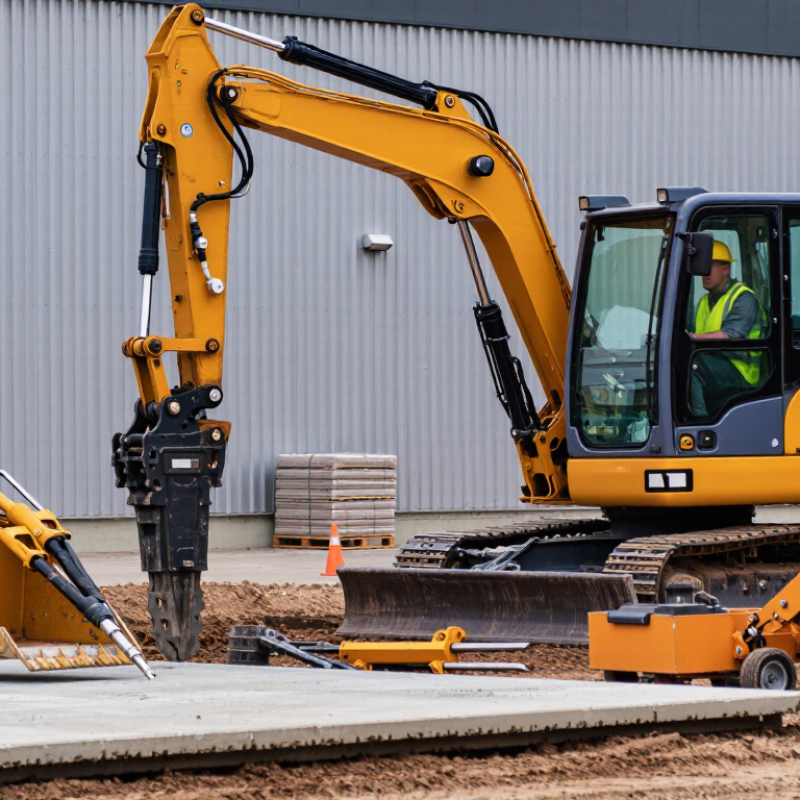
A breaker concentrates repeated impact through a steel tool for concrete or rock. A plate compactor transfers vibration into trenches, while an auger rotates a bit through soil. A tilt bucket uses hydraulic movement to shape slopes and drainage channels with fewer machine repositionings. Quick couplers make changes faster, but they do not remove the need for inspection. Before work, an operator should check the attachment pin, locking mechanism, hoses, and visible cracks. The load chart still matters when lifting with a hook or grapple. Ground conditions matter too. Soft edges can reduce stability.

In practical site work, matching the tool to the material saves fuel and reduces unnecessary strain. I have seen a powerful breaker used on thin paving where a smaller tool would have been more controlled. That choice worked, but it was not especially thoughtful. Attachment selection deserves a second look. Operators should confirm connection procedures, hydraulic limits, and inspection intervals in the equipment documentation. They should also stop when vibration, leakage, or unusual noise appears. Small warning signs are easy to dismiss. They can become expensive damage.
Why Choose Excavator Attachments for Your Projects?

What Excavator Attachments Are and How They Work

Excavator attachments replace the standard bucket with task-specific tools powered by the machine’s hydraulic system. The chart shows representative midpoint values from common operating-flow ranges: breakers typically require about 80–150 L/min, augers 40–100 L/min, grapples 30–80 L/min, plate compactors 80–120 L/min, and hydraulic shears 100–180 L/min. Actual requirements vary by attachment model, excavator size, material, and hydraulic configuration.

How Different Attachments Support Specific Project Tasks

Why Choose Excavator Attachments for Your Projects?

Different attachments turn one excavator into a more adaptable site machine. A hydraulic breaker can fracture concrete, while a tilt bucket shapes drainage channels with fewer repositioning movements. Augers create clean holes for posts and foundations. Grapples sort timber, pipe, and demolition debris more precisely than a standard bucket.

Material demand shows why this flexibility matters. The U.S. Geological Survey reported approximately 960 million metric tons of construction sand and gravel produced in 2023. That volume reflects constant work in roads, utilities, housing, and drainage. A grading bucket helps spread aggregate evenly. A compaction wheel can strengthen narrow trench shoulders. Results depend on soil conditions, attachment weight, and correct hydraulic flow. Bigger is not always better.

Project managers should match the attachment to the task, not the machine’s maximum capacity. The Equipment Leasing & Finance Foundation’s 2024 forecast identified continued investment in construction equipment, but utilization remains critical for controlling ownership costs. A breaker used only twice yearly may be better rented. Operators also need practical training, daily pin inspections, and clear visibility around the work zone. The U.S. Bureau of Labor Statistics continues to classify construction equipment operation as a hazardous occupation, so productivity cannot replace safe procedures. Some attachment choices still involve guesswork. Trialing one tool on a small section can reveal excessive vibration, slow cycle times, or poor material control before those problems spread across the project.

Why Choose Excavator Attachments for Your Projects? - How Different Attachments Support Specific Project Tasks
Attachment Type Primary Project Tasks Typical Material or Work Area Key Advantages Important Selection Considerations
General-Purpose Bucket Digging Loading Backfilling Soil, sand, gravel, and common excavated material Versatile option for everyday excavation and material handling; available in different widths and capacities. Match bucket capacity and width to the excavator's lifting capacity, breakout force, and the density of the material.
Heavy-Duty Rock Bucket Rock Excavation Screening Loading Coarse gravel, blasted rock, compacted soil, and abrasive ground Reinforced structure and wear-resistant components improve durability in demanding ground conditions. Use only when the excavator has sufficient digging force; inspect teeth, cutting edges, and wear areas regularly.
Trenching Bucket Utility Trenches Drainage Pipe Bedding Soil and other materials removed from narrow, defined excavations Narrow profile helps create consistent trench widths and can reduce unnecessary spoil removal. Select the bucket width according to pipe diameter, required working clearance, trench depth, and local safety requirements.
Grading Bucket Fine Grading Slope Shaping Site Finishing Loose soil, topsoil, sand, and aggregate used for final surface preparation Wide profile supports smooth leveling, ditch cleaning, slope trimming, and finish work. It is designed for finishing rather than heavy breakout; avoid using it to forcefully excavate hard or rocky ground.
Hydraulic Breaker Concrete Breaking Rock Splitting Demolition Concrete slabs, masonry, asphalt, and fractured or weathered rock Converts hydraulic power into impact energy, allowing one excavator to perform controlled breaking work. Verify hydraulic flow, operating pressure, carrier weight, tool diameter, and vibration limits before use.
Hydraulic Thumb Object Handling Demolition Sorting Debris Placement Logs, concrete pieces, demolition debris, rocks, and irregular objects Works with a bucket to grip, sort, position, and load materials that cannot be handled efficiently by scooping alone. Check pin geometry, hydraulic compatibility, clamping range, and the excavator's rated lift capacity.
Hydraulic Shear Steel Cutting Structural Demolition Scrap Processing Steel beams, reinforcing steel, pipe, tanks, and metal structures Provides controlled cutting and dismantling while reducing large metal components into transportable sections. Confirm required hydraulic flow and pressure, jaw opening, carrier stability, and the material's thickness and profile.
Pulverizer Concrete Recycling Secondary Demolition Rebar Separation Reinforced concrete, slabs, walls, and precast concrete elements Crushes concrete into smaller pieces and can help separate concrete from reinforcing steel for sorting and recycling. Choose a model compatible with the excavator's operating weight, hydraulic system, jaw capacity, and concrete thickness.
Auger Drive Post Holes Foundation Piers Tree Planting Soil, clay, sand, and other ground conditions suitable for rotary drilling Creates round holes efficiently for fencing, signposts, landscaping, solar supports, and light foundation work. Match the bit diameter and torque to ground conditions; use a suitable tooth configuration for hard or abrasive soil.
Compactor Plate Trench Compaction Backfill Work Slope Compaction Granular fill, soil, sand, and aggregate in confined or difficult-to-reach areas Allows compaction from the excavator, making it useful in trenches, along foundations, and on slopes where access is limited. Consider plate size, centrifugal force, hydraulic requirements, soil type, and the required lift or compaction depth.
Rake Land Clearing Debris Removal Soil Preparation Roots, brush, rocks, construction debris, and loose surface material Separates and gathers unwanted material while helping prepare ground for grading, planting, or further excavation. Use the tine spacing and structural design appropriate for the material; avoid applying excessive force to buried utilities.
Tiltrotator Precision Grading Utility Work Multi-Tool Operation Urban construction, landscaping, roadwork, and confined work areas Provides bucket rotation and tilting, improving tool positioning and reducing the need to reposition the excavator. Check hydraulic and electrical interfaces, attachment weight, quick-coupler compatibility, and the effect on lifting capacity.
Selection note: Attachment performance depends on excavator size, hydraulic flow and pressure, operating weight, material density, ground conditions, and the specific attachment design. Always follow the excavator and attachment manufacturers' operating limits and applicable job-site safety requirements.

Key Benefits of Using Excavator Attachments

Excavator attachments help one machine handle several demanding tasks. The right attachment can improve productivity without adding another heavy machine to the site. A hydraulic breaker can remove concrete, while an auger creates clean holes for posts or foundations. Grapples sort logs, scrap, and uneven debris with better control. These tools also reduce unnecessary machine movement. Less repositioning can mean lower fuel use and fewer delays. The first attachment choice is not always right.

Experienced operators match each attachment to the excavator’s lifting capacity, hydraulic flow, and working space. A bucket that is too large may slow the machine and increase wear. A compact grading bucket can shape a narrow trench more accurately. Quick couplers save valuable minutes, especially when crews switch from digging to leveling. In practice, small compatibility problems can erase those gains. I have seen operators blame an attachment when the real issue was poor flow adjustment or incorrect pin alignment.

Reliable results require more than strong equipment. Inspect hydraulic hoses for abrasion before each shift. Check pins, locking systems, teeth, and cutting edges regularly. Follow the attachment’s rated limits and the excavator’s load chart. Clean connections help prevent contamination in the hydraulic system. Operator training matters too. A skilled operator feels unusual vibration early, but experience is never perfect. Written inspection records can reveal repeated failures and encourage better maintenance decisions.

How to Select the Right Attachment for Your Excavator

Choosing an excavator attachment starts with the work, not the machine’s appearance. Identify the material, digging depth, soil condition, and daily workload. A narrow trench bucket suits utility lines, while a wider bucket improves production in loose soil. Hard, rocky ground may require a reinforced bucket or breaker.

Check the excavator’s operating weight, hydraulic flow, pressure, and lifting capacity. The attachment must match these figures precisely. An undersized tool may waste time, but an oversized tool can strain the boom and hydraulic system. Confirm the coupler dimensions and pin spacing before ordering. Measure twice. It prevents expensive delays.

I once selected a bucket by width alone and overlooked its profile. It reached the target width but carried too little material. That mistake taught me to compare capacity, cutting angle, tooth design, and visibility together. Ask the operator what feels awkward during a normal shift. Their experience often reveals problems that specifications miss. Consider attachment weight on soft ground, transport limits, replacement parts, and inspection access. Review the manufacturer’s technical data and maintenance instructions, then test the attachment under controlled site conditions. Be careful with quick decisions. Every project has different demands.

Safety, Maintenance, and Operational Considerations

Excavator attachments can improve reach, grading, demolition, or material handling on one project. The choice must follow the machine’s rated lift capacity, hydraulic flow, attachment weight, and ground conditions. A mismatched attachment may reduce stability and damage hydraulic components. According to the U.S. Bureau of Labor Statistics’ Census of Fatal Occupational Injuries, construction recorded 1,069 fatal work injuries in 2022. That figure is sobering. OSHA identifies struck-by and caught-in hazards as major construction risks, both relevant when attachments move near workers.

Safety starts before the engine runs. Inspect the coupler, locking pins, hydraulic hoses, welds, and cutting edges. Confirm the attachment is fully engaged. Keep workers outside the swing radius and never beneath a suspended load. Maintenance also needs discipline. Release hydraulic pressure before servicing, follow the manufacturer’s inspection intervals, and record cracks, leaks, unusual vibration, and excessive wear. ISO 45001 guidance supports documented hazard controls, but paperwork alone cannot detect a loose pin. That remains an operational weakness.

Tips: Match attachment flow and pressure to the excavator. Use a spotter in blind areas. Clean coupler faces before connection. Stop when visibility disappears. A short pre-start check is often skipped, especially under schedule pressure. That is exactly when it matters most. Review OSHA’s Excavation and Trenching Safety topics and the BLS 2022 CFOI data before creating site-specific procedures.