Choosing the right Demolition Attachments For Excavators can determine whether a project moves smoothly or stalls beside a half-demolished structure. The best attachment is rarely the largest one. It must match the excavator’s operating weight, hydraulic flow, material, working height, and site conditions. A compact excavator may need a small hydraulic breaker, while a high-reach machine may require a powerful pulverizer or shear.
Demolition equipment specialist Mike Taylor offers a practical reminder: “The right attachment fits the carrier, the material, and the work sequence—not just the job title.” That principle deserves attention. A breaker delivers focused impact against concrete, but excessive vibration may damage nearby surfaces. A pulverizer separates reinforced concrete and exposes steel. A hydraulic shear cuts structural metal with controlled force. Grapples handle loose debris, although poor jaw design can slow sorting and increase operator fatigue.
This guide examines the top demolition attachments for excavators and explains where each tool performs best. It considers productivity, attachment weight, maintenance access, visibility, and hydraulic compatibility. Real job sites are rarely perfect. Hoses leak. Reinforcement becomes denser than expected. Operators sometimes choose familiar tools instead of suitable ones. That happens.
The goal is not to promote one attachment for every project. It is to help contractors compare practical options before mobilization. Equipment selection should include manufacturer specifications, operator training, site assessment, and documented maintenance. Small details matter. A worn tooth can reduce output. A poorly matched attachment can waste fuel, time, and money.

Excavator demolition attachments perform different tasks across concrete, steel, masonry, and mixed debris. A hydraulic breaker delivers repeated impact energy, making it effective for slabs, foundations, and reinforced walls. Its pointed tool penetrates hard surfaces, while a blunt tool helps reduce fractured concrete. However, excessive impact can damage surrounding structures. Careful control matters.
A pulverizer crushes concrete and separates much of the reinforcing steel during secondary processing. Hydraulic shears cut beams, pipes, and structural steel with controlled force. Grapples then lift, sort, and load irregular debris from the work area. Drum cutters remove concrete or rock gradually, which helps when vibration must remain low.
In practice, the best attachment depends on material hardness, machine size, working height, and hydraulic flow. I have seen productive crews lose time by choosing power before checking compatibility.
Tips
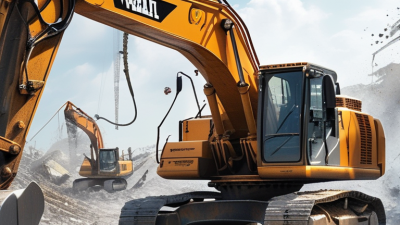
Hydraulic breakers are among the most practical demolition attachments for excavators. They convert hydraulic flow into repeated impact energy, breaking concrete slabs, masonry walls, and natural rock. On a jobsite, an operator can shape the work quickly, especially where saw cutting or manual tools would be too slow. The right breaker depends on excavator weight, hydraulic flow, material thickness, and access conditions. Bigger is not always better.
For reinforced concrete, a medium breaker with suitable chisel geometry can fracture sections without excessive vibration. Narrow chisels focus energy on dense spots, while blunt tools help with controlled fragmentation in softer masonry. Rock demolition needs careful positioning and steady pressure. The breaker should strike squarely, not at an angle, because misalignment accelerates tool wear and may damage the attachment. Short bursts often work better than continuous hammering. Watch the surface.
Experienced crews inspect hoses, mounting pins, bushings, and tool retainers before each shift. They also confirm the carrier’s pressure and return-line requirements. Poor lubrication remains a common, avoidable failure. Noise, flying fragments, and vibration require site-specific controls, trained operators, and suitable protective equipment. In practice, breaker selection is not exact science; unfamiliar concrete may behave differently than expected. Conservative settings and regular pauses reveal problems earlier, although they can slow production. That trade-off is usually worth accepting.
Structural demolition needs controlled force, not raw power alone. Shears cut steel beams, pipes, and reinforcing bars with steady hydraulic pressure. They work best when the excavator remains stable and the operator can see the cut. A narrow jaw helps reach crowded frames. A wider jaw may process heavier sections faster. That trade-off matters on dense sites. I have found that matching jaw capacity to the excavator prevents sluggish cycles and unnecessary strain. Small errors become expensive.
Pulverizers reduce concrete walls and slabs into manageable fragments. Their crushing action exposes embedded steel, making separation easier during sorting. Fixed pulverizers suit precise work near foundations, while rotating models improve positioning around awkward structures. The attachment should bite firmly without forcing the boom sideways. Operators should watch hydraulic temperature, pin wear, and jaw alignment throughout the shift. A neglected pivot can turn clean processing into uneven crushing. That detail is easy to miss.
Crushers handle larger concrete pieces after primary breaking or selective demolition. They compress material repeatedly, producing sizes suitable for hauling or on-site reuse. The correct chamber size depends on concrete thickness, reinforcement, and the excavator’s lifting capacity. Overloading causes stalled jaws and unstable handling. I would rather accept slower cycles than force an attachment beyond its rated limits. Still, productivity is not only measured in tons per hour. Clear visibility, balanced weight, and predictable control often protect the structure and the crew. Some projects reveal this the hard way.
Grapples and multi-processors are central tools for controlled demolition and material handling. A grapple can lift timber, steel, concrete fragments, and mixed debris with less repositioning. Its rotating head helps operators place materials into separate stockpiles.
This matters because the U.S. EPA reported about 600 million tons of construction and demolition debris in 2018. That volume was more than twice the amount of municipal solid waste.
Multi-processors offer broader capability. Interchangeable jaws can crush concrete, cut reinforcement, or process steel on the same carrier. The correct jaw depends on the material and the excavator’s hydraulic flow. An attachment that is too heavy can reduce stability and cycle speed. An undersized unit may waste fuel through repeated passes. Small details matter.
Sorting quality affects the value of recovered material. Eurostat reported that construction generated 38.4% of total EU waste in 2022. Grapples support cleaner separation before crushing or loading.
Operators should check jaw width, rotation torque, hose protection, and visibility from the cab. Field conditions are rarely perfect. Dust can hide reinforcement, and uneven rubble can shift unexpectedly.
A common mistake is choosing maximum attachment weight instead of matching the carrier, task, and site sequence. Better planning usually produces fewer handling cycles and less contamination.
Choosing the right demolition attachment starts with the excavator, not the catalog. Confirm operating weight, approved hydraulic flow, pressure, lift capacity, and auxiliary-line size. An oversized breaker can damage the carrier and waste fuel. A weak attachment can stall production.
Match the tool to the material. Hydraulic breakers suit reinforced concrete and masonry. Pulverizers separate concrete from rebar during processing. Shears cut structural steel, while grapples handle sorted debris. The European Commission’s 2016 Construction and Demolition Waste Protocol reports that this waste represents 25–30% of total European waste. The U.S. Environmental Protection Agency recorded approximately 600 million tons of construction and demolition debris in 2018. That volume makes sorting, dust control, and transport planning practical priorities.
On site, inspect the structure before choosing working reach and tool size. Record concrete thickness, steel density, access limits, and expected daily volume. Select a quick coupler only when its locking system matches the excavator and attachment requirements. ISO 13031 provides relevant guidance for hydraulic quick couplers on earth-moving machinery. Check service intervals, wear-part availability, hose protection, and operator visibility. The choice is rarely perfect on day one. Material strength and operator technique can change output sharply. A short trial often reveals more than a brochure, but trial results may vary across structures. Track cycle time, fuel use, vibration, and processed tonnes before committing to a long-term setup.