Leave Your Message

How to Choose Scrap Yard Equipment Suppliers in China

Choosing Scrap Yard Equipment suppliers in China requires more than comparing catalog prices. A dependable supplier should understand material flow, loading limits, dust control, and daily operating pressure. In practice, a baler that looks suitable online may struggle with wet steel, irregular feedstock, or limited floor space. Ask for drawings, cycle times, motor specifications, and maintenance schedules before discussing discounts. Small details matter. A loose access door or poorly protected sensor can interrupt an entire shift. Experienced buyers often begin with a clear equipment list and a measured site layout. They also compare several factories, not only trading companies. This approach does not guarantee a perfect purchase. It reduces avoidable surprises.

Professional judgment should be supported by evidence. Request company registration details, quality management records, product test reports, and references from comparable facilities. If possible, inspect a working machine through a verified factory visit or live video demonstration. Watch the feeding process, emergency stop response, noise level, and finished bale consistency. Ask who supplies replacement parts and how quickly technical support responds. Written warranties should define coverage, exclusions, installation duties, and response times. International buyers must also confirm applicable safety, electrical, environmental, and import requirements with qualified local professionals. Supplier claims are useful, but operating evidence is stronger. Even careful teams can overlook installation costs, training, or future upgrades. Treat those omissions as questions, not accusations. A practical shortlist should balance reliability, service capacity, transparent communication, and total ownership cost.
How to Choose Scrap Yard Equipment Suppliers in China

Define Your Scrap Yard Equipment Requirements

Choosing scrap yard equipment suppliers in China starts with a clear definition of your operating requirements. Do not begin with catalog images. Begin with material type, daily volume, feed dimensions, and target output. The World Steel Association reported 1.89 billion tonnes of crude steel production in 2023. That scale shows why processing capacity must match local supply, not vague growth expectations. Record peak loads, seasonal changes, available floor space, and electricity limits.

Your specification should also describe contamination, moisture, noise limits, and worker access. For mixed metal, you may need sorting, shearing, baling, or magnetic separation. For electronic scrap, the Global E-waste Monitor 2024 recorded 62 million tonnes generated worldwide in 2022. Safer containment and controlled handling deserve equal attention. Ask suppliers for throughput tests using material similar to yours. Request motor ratings, cycle times, maintenance intervals, spare-part lead times, and documented safety features. A spreadsheet can still lie.

Tips: Build a one-page requirement sheet before contacting suppliers. Include photos of your feedstock and actual dimensions. Compare usable output, not only machine capacity. Inspect welds, guards, hydraulic lines, and emergency stops during a factory visit. Ask for references from yards with comparable materials. The best specification may expose an uncomfortable truth: your planned machine is oversized, underpowered, or difficult to service locally. That discovery is useful.
Research and Compare Chinese Equipment Suppliers

Choosing equipment suppliers in China requires more than comparing catalogue prices. Start by defining yard conditions: material type, hourly volume, moisture, available power, and installation space. Send identical specifications to several suppliers. This makes quotations easier to compare. Ask for drawings, motor details, production capacity, and expected maintenance intervals. A low price can hide thinner steel, limited controls, or expensive replacement parts. I learned this after reviewing a quotation that excluded delivery and commissioning. It looked attractive, but the final cost was different.

Research each supplier’s manufacturing experience, engineering team, and quality process. Request factory photographs, inspection records, and recent customer references for similar applications. Video tours help, but they cannot replace an independent inspection. Check whether welds, bearings, electrical cabinets, and safety guards match the stated design. Ask how the supplier handles defects, spare parts, training, and response times. Clear answers matter more than polished sales language. Still, references may be selective, so verify details directly and ask difficult questions.

Build a comparison sheet with technical fit, total cost, lead time, warranty terms, documentation, and service capacity. Compare like for like. Have an engineer review the proposal before signing. Confirm payment stages and inspection points in writing. A sample test using your own material can reveal feeding problems, dust control limits, or unstable throughput. I would not rely on a promised capacity number alone. Real yard conditions are messier than test reports. Leave room for uncertainty, because every supplier may present its best day.

Verify Supplier Quality, Certifications, and Manufacturing Capacity

Choosing a scrap yard equipment supplier in China requires more than comparing prices. Verify how the equipment is made, tested, and supported.

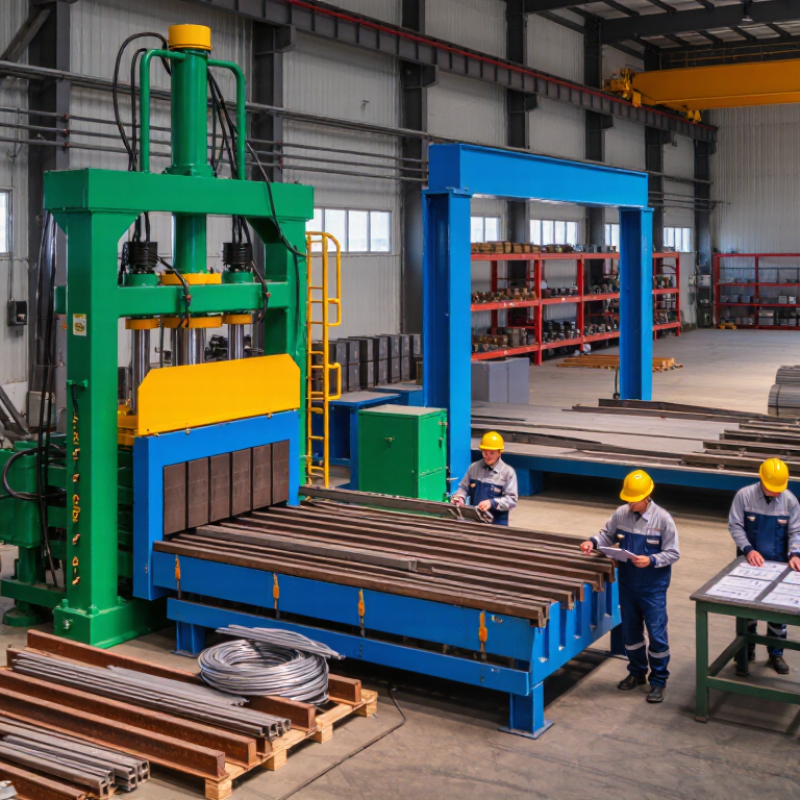
Request the supplier’s business license, quality certificates, and equipment-specific test records. Do not accept scanned documents without checking the issuing organization and validity dates. Ask whether certifications cover the exact model, not only a similar machine. A factory visit can reveal important details: steel storage, welding quality, machining tools, assembly space, and final inspection areas. Look closely at hydraulic hoses, electrical cabinets, safety guards, and painted surfaces. Small defects often suggest weak process control.

Manufacturing capacity matters when delivery schedules become tight. Ask for monthly output, current orders, production lead times, and key component stock. Review inspection reports for cutting force, bale density, noise, emergency stops, and electrical performance. A live video test is useful, but an independent pre-shipment inspection is stronger. Request references from comparable scrap yards, then ask about downtime, spare parts, and response times. A polished factory video proves little. No checklist is perfect. A supplier may pass one audit and still struggle with after-sales service. Keep written records, compare answers across departments, and test sample components when possible. Clear evidence is more reliable than confident promises.

How to Choose Scrap Yard Equipment Suppliers in China - Verify Supplier Quality, Certifications, and Manufacturing Capacity

Evaluation Dimension What to Verify Relevant Standard or Evidence Recommended Acceptance Benchmark Warning Signs
Legal Identity and Scope Confirm the registered business entity, business scope, factory address, and export authorization. Current Chinese business license, customs registration where applicable, and consistent contract details. All legal documents, quotations, invoices, and bank details identify the same contracting entity. Documents show different entities, unverifiable addresses, or a trading scope that does not cover the equipment.
Quality Management System Check whether quality procedures cover incoming materials, production, inspection, nonconformities, and corrective actions. ISO 9001 certificate issued by an accredited certification body; certificate scope and validity must match the factory. Certificate is valid, traceable in the certification body’s database, and supported by documented inspection records. Expired certificate, incorrect factory address, missing scope, or refusal to provide audit evidence.
Environmental Management Review controls for waste oil, metal dust, welding fumes, wastewater, noise, and hazardous materials. ISO 14001 certification where relevant, environmental permits, and legally required inspection records. Environmental controls are documented and appropriate for cutting, baling, shredding, or metal-processing operations. Uncontrolled oil leakage, excessive dust, poor waste storage, or missing local compliance documentation.
Product Safety Compliance Determine the destination-market requirements for hydraulic, electrical, guarding, emergency-stop, and control systems. Applicable machinery, electrical, EMC, pressure-equipment, and occupational-safety requirements; CE marking only when applicable to the destination market. Supplier provides a risk assessment, technical file or equivalent documentation, manuals, drawings, and conformity records. CE logo supplied without supporting documents, incomplete manuals, bypassed guards, or unclear emergency-stop design.
Material and Component Traceability Check how steel plates, hydraulic cylinders, motors, bearings, electrical parts, and wear components are identified. Material certificates, purchase records, batch numbers, inspection reports, and approved component lists. Critical components can be traced from purchase record to finished-machine serial number. Unmarked components, undocumented substitutions, or inability to identify the origin of safety-critical parts.
Fabrication and Welding Capability Inspect cutting, bending, welding, stress relief, dimensional control, and surface-treatment processes. Welding procedure specifications, welder qualification records, inspection plans, and calibration certificates. Production methods match the machine design, welds are visually inspected, and critical dimensions are recorded. Visible cracks, undercutting, excessive spatter, distorted frames, or no documented welding controls.
Machining and Assembly Capacity Confirm that the factory owns or controls the equipment needed for frames, shafts, pins, hydraulic systems, and final assembly. Equipment list, process flow chart, machine maintenance records, capacity plan, and outsourcing controls. Capacity is demonstrated with recent production records and is sufficient for the required delivery schedule. Capacity claims rely only on brochures, major processes are undisclosed, or all critical work is outsourced without controls.
Factory Inspection and Testing Review incoming, in-process, final, load, hydraulic, electrical, noise, and safety testing procedures. Inspection and test plans, calibrated instruments, signed test reports, and acceptance criteria. Every delivered unit receives documented final testing against the approved technical specification. No calibrated instruments, generic test reports, missing serial numbers, or pressure/load tests performed only on request.
Production Capacity and Lead Time Validate monthly output, current production loading, bottleneck processes, and realistic delivery dates. Capacity statement supported by production schedules, work orders, equipment availability, and historical delivery records. Quoted lead time includes engineering, procurement, fabrication, testing, packing, and shipping preparation. Unusually short delivery promises, no capacity calculation, or repeated changes to the promised schedule.
Spare Parts and Maintenance Check availability of wear parts, hydraulic seals, knives, screens, bearings, filters, and electrical components. Spare-parts list, exploded drawings, part numbers, recommended stock levels, and maintenance schedule. Consumable and safety-critical parts are clearly identified and can be reordered using documented part numbers. No parts list, interchangeable parts without specifications, or dependence on undocumented custom components.
After-Sales and Warranty Support Evaluate response channels, remote diagnostics, commissioning support, training, and warranty exclusions. Written warranty terms, service-level commitments, troubleshooting procedures, and training documentation. Responsibilities, response times, replacement-part procedures, and travel costs are defined before contract signing. Verbal warranty promises, unclear exclusions, no technical contact, or support limited to a sales representative.
Pre-Shipment Verification Arrange document review, video inspection, or independent third-party inspection before final payment. Approved drawings, factory acceptance test report, packing list, photographs, serial numbers, and inspection checklist. Payment release is linked to documented conformity with agreed specifications and test results. Supplier rejects independent inspection, changes specifications after order confirmation, or requests full payment before testing.

Evaluate Pricing, Customization, Delivery, and After-Sales Service

Choosing Scrap Yard Equipment Suppliers in China

Price should be judged beyond the first quotation. The BIR World Steel Recycling in Figures 2024 report estimates that more than 600 million tonnes of ferrous scrap are recycled globally each year. That volume demands dependable throughput, not merely a low purchase price. Ask for motor ratings, blade life, energy use, installation costs, and recommended spare parts. Compare the cost per processed tonne. A cheap machine can become expensive when downtime reaches a busy yard. Request a clear quotation with taxes, packaging, shipping, commissioning, and warranty terms. Some quotes are not complete.

Customization should begin with measured site conditions. Share scrap dimensions, moisture levels, daily tonnage, power supply, and available floor space. A capable supplier should provide layout drawings, safety documentation, and acceptance-test targets. The World Steel Association reported global crude steel production of about 1.89 billion tonnes in 2023, showing the scale of material handling needs. However, larger capacity is not always better. Oversized equipment may waste electricity and complicate maintenance. I have seen buyers focus on maximum output, then struggle with feeding space and operator access.

Delivery promises need evidence. The World Bank’s 2023 Logistics Performance Index highlights customs, infrastructure, tracking, and delivery reliability as separate concerns. Request a production schedule, packing photos, inspection records, and shipment milestones. After-sales service matters just as much. Confirm remote troubleshooting times, technician availability, spare-parts inventory, and training materials. Get these commitments in writing. A one-year warranty sounds useful, but vague response terms can leave a machine idle for weeks. Good suppliers answer technical questions precisely, even when the answer is inconvenient.

Select the Supplier and Establish a Reliable Purchase Agreement

Selecting a Chinese scrap-yard equipment supplier requires more than comparing quotations.

Define material type, hourly throughput, feed size, contamination, and power limits. According to World Steel Association’s World Steel in Figures 2024, global crude steel production reached 1,849.1 million tonnes in 2023. This scale supports strong demand for dependable scrap-processing equipment.

However, market size does not prove supplier quality. Request factory records, production videos, technical drawings, and references from comparable yards. Ask for a live acceptance test.

A reliable purchase agreement should specify the exact model, rated capacity, tolerances, delivery milestones, installation duties, training, spare parts, and warranty response times.

Include measurable acceptance standards, such as output per hour, noise limits, energy consumption, and finished-material size. Vague wording causes expensive arguments.

ISO 9001 certification can indicate a controlled quality system, but it does not prove machine performance.

Use independent inspection before shipment, and record test results with photographs and signed documents.

Payment should follow verified milestones, not only the shipping date.

Hold a reasonable balance until commissioning is complete. The International Energy Agency’s Energy Efficiency 2024 report stresses the importance of measuring industrial energy performance, so request actual power data under working conditions.

A checklist helps, but it is never perfect. Supplier references can be outdated. Factory visits may also show only a prepared production line.

Build room for corrective action, because even a carefully negotiated agreement may miss one practical detail.