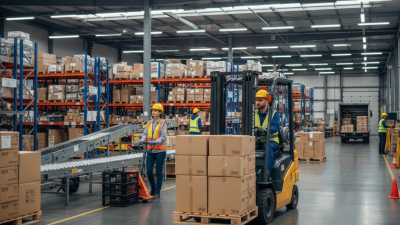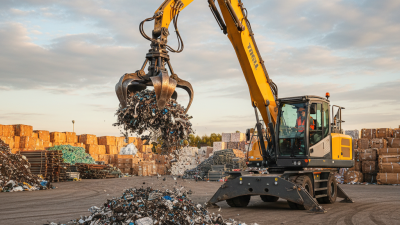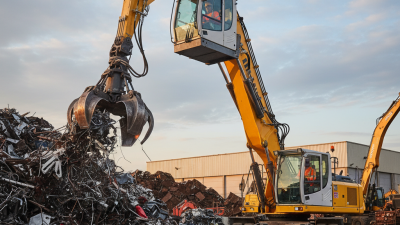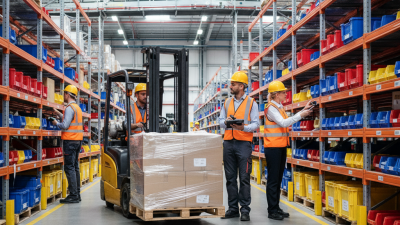
Choosing the right Material Handler manufacturer in 2026 requires more than comparing catalog prices. Global buyers need dependable machines, practical support, and evidence that performance claims match real jobsite conditions. A handler working in a busy recycling yard faces different demands from one moving timber, scrap metal, or bulk materials at a port.
This guide examines leading Material Handler manufacturers through measurable buying criteria. These include lifting capacity, reach, hydraulic efficiency, operator visibility, fuel or electric power use, attachment compatibility, and service coverage. It also considers factory experience, quality systems, warranty terms, spare-parts availability, and technician response times. A machine may appear efficient on paper. Field performance can tell a different story.
Reliable research should combine manufacturer specifications, dealer feedback, user experience, and independent testing where available. Buyers should inspect service records, ask about delivery schedules, and request clear total-cost estimates. A low purchase price can become expensive when filters, tires, software, or specialist repairs are difficult to source. Small details matter.
No ranking can fit every operation perfectly. That is an honest limitation. Local climate, material density, loading cycles, and operator skill can change the result. Some manufacturers communicate more clearly than others, while certain claims still deserve closer verification. This overview therefore focuses on practical strengths, realistic limitations, and long-term value. It is designed to help fleet managers, contractors, recyclers, ports, and industrial buyers make informed decisions with fewer costly surprises.
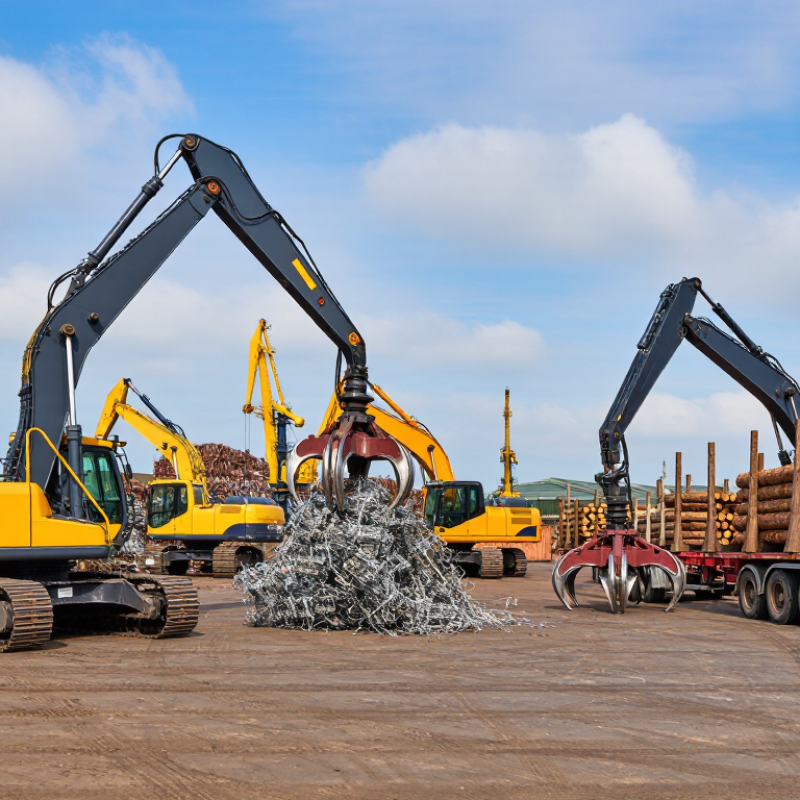
Material Handler Manufacturers: Definition, Equipment Types, and Industry Roles
Material handler manufacturers design equipment that moves, lifts, sorts, and places heavy materials safely. Their machines support ports, recycling yards, warehouses, construction sites, forestry operations, and mining facilities. Common equipment includes wheeled material handlers, crawler machines, forklifts, telehandlers, conveyors, grabs, and magnetic attachments. Each type serves a different workflow. A compact handler may suit a crowded recycling yard, while a crawler model offers stability on uneven ground.
Experienced manufacturers study load weight, reach distance, operating surfaces, attachment needs, and daily cycle times. They also provide technical manuals, maintenance schedules, operator training, and replacement-part support. These details matter to global buyers because climate, power systems, workplace rules, and service access vary by region. A reliable supplier should explain rated capacity clearly, not hide limitations behind impressive specifications. Real performance can change with the attachment, material density, and operator habits. No specification is perfect. Buyers should verify field conditions before selecting equipment.
Tips: Request test data for your actual material. Check visibility, emergency controls, noise levels, and service intervals. Ask how quickly critical parts can be supplied. Compare fuel use or battery performance under realistic workloads. A site visit can reveal problems that brochures miss. Document training requirements and inspection routines before delivery. Small omissions often become expensive delays.
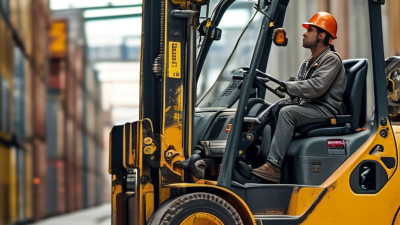
Global purchasing demands more than a polished website or a low quotation. When evaluating material handler manufacturers, examine their experience with similar loads, working environments, and export requirements. Request project records, equipment photographs, and references from buyers in comparable industries. A reliable manufacturer should explain machine capacity, reach, operating weight, fuel use, and attachment compatibility in clear language.
Factory evidence matters. Ask for quality-control procedures, operator training records, inspection reports, and testing methods for hydraulic and structural components.
Verify whether production follows recognized safety and environmental standards in your destination market. Independent certificates help, but traceable test data is stronger. Speak with technical staff, not only sales representatives. Their answers should remain consistent.
Commercial details also deserve close attention. Compare spare-parts availability, warranty limits, response times, remote diagnostics, and local service coverage. Calculate total ownership cost, including transport, commissioning, maintenance, and expected downtime. A cheaper unit can become expensive after one delayed repair. Numbers can mislead. My own evaluations have not always been right; supplier promises sometimes looked stronger than field performance. Visit the facility when possible, but do not treat a clean showroom as proof of manufacturing depth. Check production records, inspect finished machines, and ask how defects are handled. Small omissions often reveal larger weaknesses.
2026 Leading Material Handler Manufacturers by Product and Market Strength
In 2026, leading material handler manufacturers are separated by product expertise and market reliability. Scrap handlers need strong hydraulic systems, elevated cabins, and precise attachment control. Timber handlers demand stability, reach, and durable protection around the operator’s station. Port and industrial handlers often prioritize fast cycles, low downtime, and flexible configurations. These differences matter more than a broad product catalogue.
Market strength also depends on practical support. During site evaluations, buyers should examine service response times, spare-part availability, operator training, and published performance data. A manufacturer with strong regional technicians may outperform a larger supplier with limited local coverage. Energy efficiency is increasingly important, but fuel figures can change with payload, ground conditions, and operator habits. No ranking is perfect. Actual site testing remains necessary.
Tips: Compare machines using the same load, cycle distance, and working hours. Request maintenance records from comparable operations. Check attachment compatibility before signing a purchase agreement. Ask for realistic delivery estimates, not optimistic promises. A short field demonstration can reveal visibility problems, hydraulic delays, or uncomfortable controls. Small details matter.
Representative maximum working-reach ranges by major material-handler application. The figures reflect typical industry specifications and are presented without company or brand data.
Port and scrap handlers typically require the longest reach, while construction and forestry machines are generally optimized for shorter, more maneuverable operating zones.
2026 Best Material Handler Manufacturers for Global Buyers
Global buyers should compare material handler manufacturers through documented standards, not attractive catalog images. Ask for current certificates, factory test records, weld inspection results, and traceable component data. Standards matter. Requirements can differ between ports, warehouses, mines, and construction sites. An accepted machine must also match local electrical, safety, noise, and emissions rules. Do not treat one certificate as universal approval. That assumption causes expensive delays.
Customization should begin with the working environment. Share aisle width, floor condition, load center, lifting height, duty cycle, and ambient temperature. Useful options may include corrosion protection, cold-store seals, camera systems, reinforced forks, or multilingual controls. Ask how each change affects capacity, stability, maintenance, and delivery time. A custom color is easy; a revised hydraulic system is not. Some suppliers promise everything. Detailed drawings reveal what is realistic. Buyers should review the final specification line by line.
After-sales support often separates a reliable supplier from a short-term seller. Compare warranty duration, exclusions, technician coverage, response targets, training, and spare-parts availability. Request a sample service schedule and a clear escalation process. Remote diagnostics can reduce downtime, but only when technicians receive usable machine data. Ask whether common parts can arrive within days or require overseas shipment. During evaluation, speak with service contacts, not only sales staff. A polished proposal may hide weak support. That risk deserves honest attention. Manufacturers with strong documentation, practical customization, and measurable support are easier to trust across borders.
2026 Best Material Handler Manufacturers for Global Buyers
Sourcing, Compliance, and Total Cost Considerations for International Buyers
Selecting a material handler requires more than comparing catalog prices. Experienced buyers should match rated capacity, lift height, aisle width, and duty cycle with actual warehouse conditions. A machine rated for 2,000 kilograms may perform poorly on uneven floors or during continuous operation. Ask manufacturers for load charts, inspection records, and references from similar environments.
Compliance documents must fit the destination market. Request declarations, safety test reports, electrical certificates, manuals, and serial-number traceability before placing an order. Confirm language requirements for warning labels and operating instructions. Customs paperwork also needs accurate product descriptions, tariff classifications, country-of-origin details, and packing lists. Small document errors can delay a shipment.
Check the details.
Total cost includes ocean freight, insurance, import duties, installation, training, spare parts, batteries, and routine servicing. Compare expected downtime, not only the purchase price. A cheaper unit may need specialized parts that take six weeks to arrive. That risk can exceed the original savings. Ask for a parts list with prices and delivery times. Also examine warranty coverage, remote diagnostics, technician availability, and software access.
A practical evaluation should include a factory video inspection or independent pre-shipment check. Review welding quality, hose routing, battery protection, and emergency controls. Some suppliers provide polished documents but weak after-sales support. That possibility deserves attention. My own preference is a documented comparison sheet, although early estimates are often incomplete and must be revised after freight and compliance quotes arrive.
| Manufacturer Profile | Typical Equipment Scope | Typical Rated Capacity | Key International Compliance Areas | Typical Export Lead Time | Documentation Readiness | Main TCO Drivers | Best Fit for Global Buyers |
|---|---|---|---|---|---|---|---|
| Heavy-Duty Industrial Handling Specialist | Mobile material handlers, industrial loaders, scrap and bulk-material handling systems | Approximately 10–100+ metric tonnes, depending on configuration | Machinery safety assessment, guarding, emergency-stop systems, electrical conformity, noise and emissions requirements where applicable | 12–30 weeks for configured or engineered equipment | Usually includes manuals, load charts, spare-parts lists, inspection records and packing documentation | Capital price, fuel or electricity use, tyres or tracks, attachments, preventive maintenance and port handling | Ports, recycling facilities, steel yards, quarries and large bulk-material terminals |
| Warehouse Automation Integrator | Conveyors, sortation, pallet handling, automated storage and retrieval, warehouse-control interfaces | Unit loads commonly range from about 50 kg to 1,500 kg; system capacity is normally specified in cases or pallets per hour | Machine safety, functional safety, electrical safety, cybersecurity controls, software validation and local installation rules | 20–52 weeks for design, integration, testing and commissioning | Requires layout drawings, interface specifications, factory-acceptance procedures, risk assessments and software documentation | Engineering, software licenses, installation, integration, operator training, downtime risk and ongoing support | Distribution centers seeking higher throughput, traceability and reduced manual handling |
| Electric Forklift and Pallet-Handling Manufacturer | Counterbalance trucks, reach trucks, pallet trucks, stackers and pedestrian warehouse equipment | Approximately 1–16 metric tonnes for common industrial forklift classes | Applicable forklift design and stability requirements, battery and charger safety, EMC, operator protection and local lifting-equipment rules | 6–20 weeks for standard configurations; longer for customized masts or attachments | Should include rated-capacity plates, operating instructions, battery data, charger specifications and conformity documents | Battery replacement, charging infrastructure, tyres, operator training, maintenance intervals and residual value | Warehouses, manufacturing plants, retail distribution and indoor logistics operations |
| Crane, Hoist and Lifting-System Manufacturer | Overhead cranes, gantry cranes, hoists, lifting beams and engineered lifting systems | From small workshop loads to several hundred tonnes for engineered systems | Structural calculations, rated-load testing, lifting-accessory requirements, electrical safety, inspection and workplace lifting regulations | 16–40 weeks, including engineering, fabrication, testing and site preparation | Requires engineering calculations, test certificates, maintenance instructions, inspection schedules and foundation loads | Building modifications, runway installation, load testing, inspections, maintenance and production interruption | Steel fabrication, machinery assembly, shipyards, maintenance workshops and heavy manufacturing |
| Container and Intermodal Handling Specialist | Empty-container handlers, reach stackers, terminal tractors and intermodal yard equipment | Common operating ranges cover approximately 8–45 tonnes, depending on lift height and load position | Vehicle safety, visibility, lifting stability, emissions or electric-power requirements, road-use restrictions and port security rules | 16–36 weeks for standard models; engineered options may require additional time | Should include load charts, stability data, inspection records, service manuals and component traceability | Energy consumption, tyres, hydraulic components, emissions compliance, operator availability and equipment uptime | Ports, inland container depots, rail terminals and high-volume intermodal yards |
| Bulk-Material Conveyor and Feeder Manufacturer | Belt conveyors, screw conveyors, feeders, hoppers, transfer points and dust-control systems | Capacity is commonly specified by throughput, from below 100 tonnes/hour to several thousand tonnes/hour | Guarding, emergency pull-cords, lockout procedures, dust-control requirements, electrical conformity and hazardous-area rules where applicable | 14–32 weeks, depending on conveyor length, material characteristics and site engineering | Needs process data, belt calculations, motor details, drawings, spare-parts schedules and commissioning procedures | Civil works, support steel, drives, belts, wear liners, dust suppression, cleaning and energy use | Cement, aggregates, mining, grain, biomass and other continuous-flow material applications |
| Custom Fabrication and OEM-Adaptation Supplier | Hoppers, grabs, buckets, lifting frames, attachments, chutes and application-specific handling assemblies | Capacity varies widely; engineering should be based on payload, reach, density, centre of gravity and duty cycle | Weld quality, material traceability, structural calculations, attachment compatibility, load testing and local machinery rules | 8–24 weeks for repeat designs; first-time engineering may take longer | Quality plans, welding records, material certificates, dimensional inspection reports and operating limits should be requested | Design changes, tooling, wear materials, transport dimensions, compatibility testing and replacement cycles | Buyers requiring adaptation to existing fleets, unusual materials or site-specific operating conditions |
International Buyer Evaluation Checklist
Confirm the destination-country machinery, electrical, lifting, emissions and workplace-safety requirements before ordering. Compare total cost of ownership rather than purchase price alone, including freight, duties, installation, commissioning, energy, consumables, spare parts, inspections, training, downtime and end-of-life disposal. Lead times and capacity ranges shown above are general planning benchmarks for equipment categories, not quotations or company-specific performance claims.